Our director Rob Colley has been building websites since 1997. Here, he shares the exact reasons he sees mission-driven platforms fail – and how to fix them with our free kit.
Last summer, I met a digital product lead at a pub in London. We’d been working together for a few months by then, and I wanted to understand what had really been going on before they came to us – what made their job harder, what was holding back their mission-led organisation’s work.
Over a pint, they told me all about the headache of handling high content turnover with an unresponsive agency: “There’s stuff coming in every day, so when the senior leadership team asks what’s happening, it’s more stress for me.”
Their previous agency had built the site, then vanished. Every request sat in a ticket system for weeks. Bug fixes piled up. And every time their senior leadership asked for an update, they had nothing to offer except “I'm still chasing the agency.” Because, well, they were.
The platform worked, technically. But they were stuck playing intermediary between an agency that wasn’t giving what they needed and leadership who just wanted to see progress. Managing constant content from a team of 100 people was getting squeezed by the stress of a partnership that had stopped being a partnership.
That conversation is why we built:
The problem is structural, not isolated
We’ve been making, supporting, and amplifying specialist web platforms for mission-driven organisations for almost 20 years. And over the past few years, something’s shifted.
It’s not that platforms are getting worse – technology is getting better. It’s that the gap between what organisations need and what they’re getting has widened. Digital is a priority for most teams. But the operational foundations to sustain it – strategy, funding, capacity, ongoing support – just aren’t there.
Look at the public sector: the State of Digital Government Review found £45 billion in potential annual savings from digitisation are still locked up. How mad is that? Nearly 50 billion pounds in efficiency gains that could be realised if platforms were looked after properly.
The stats from this year’s Charity Digital Skills Report show this is structural across the third sector: 74% of UK charities say digital is a priority, but only 44% have a strategy. That’s down from 50% the previous year.
That gap lands on people. Someone is carrying the weight of digital delivery without the budget, capacity, or support to do it properly.
And it’s not just charities. Independent think tanks, universities, public sector organisations – they’re all dealing with versions of the same problem. Platforms built as projects, but never getting the ongoing care they need to stay stable.
Four patterns, over and over

Drift – this is exactly what the digital product lead was experiencing. It’s what we call it when the agency relationship goes quiet after launch and support becomes slow and transactional instead of steady and proactive.
From our client work and analysing sector research from 2025, we see three other common patterns causing platform stress:

Neglect: The platform still works, but small changes that used to take days now take weeks. Security updates pile up. Accessibility issues sit unfixed. Nobody’s maintaining it, so it slowly degrades until something breaks badly enough to force action.

Overbuild: The platform was a significant investment, but it feels unnecessarily complex. Half the features go unused. You built for where you thought you’d be in 18 months, not where you were at launch. The budget that could have gone to better accessibility or earlier delivery went to features gathering dust.

AI spiral: Pressure to “do AI,” but nobody’s defined why. Tools get adopted, value stays unclear, privacy concerns surface. You’re experimenting without governance because everyone says you should be using AI – not because you know what problem it’s solving.
Most platforms show a combination of two patterns. The thing to ask here isn’t “what's wrong with our website?” It’s: “Which pattern is causing the most stress right now?”
That’s usually what’s draining budget, slowing publishing, and creating risk. And it’s what we’d recommend teams stabilise first.
Why we built the Digital Platform Triage Kit
When that digital product lead came to us, what they needed wasn’t complicated. They just needed an agency that would respond. That would fix things without being chased, and share the weight so they could focus on managing high content turnover instead of an unresponsive partnership.
After they’d been working with us for a while, they told me what made Cursive’s approach different:
“100% the aftercare. The team was there when we needed stuff fixing and I didn’t have to wait around – and that stops senior leadership breathing down my neck.”
That partnership approach is why 92% of our clients have stayed with us over the last five years. Pressure from leadership drops when there’s visible progress. Stress lowers when you’re not constantly chasing. You can focus on your job.
Not everyone needs a new agency. Some organisations just need to diagnose what’s happening and stabilise what's fixable with what they already have.
So we pulled together everything we’ve learned from almost 20 years of this work – the patterns we see, the questions that cut through to the real issue, the stabilisation approaches that work – and put it into something practical people can use.
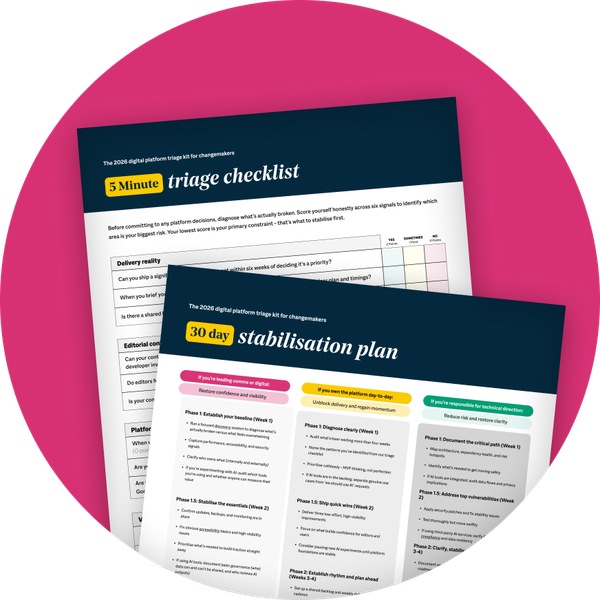
The 2026 Digital Platform Triage Kit is free, it lives on our website as a proper resource you can return to time and time again (not a PDF you download and never open), and it’s designed to give you clarity in about five minutes.
How the kit works
The kit walks you through six signals to diagnose your platform health:
Delivery reality: Can you ship improvements at a predictable pace, or does every change feel like drama and delay?
Editorial confidence: Can your content team publish without developer involvement, or does publishing feel fragile?
Platform resilience: Is your platform stable, accessible, secure? Are you measuring it?
Visibility and ownership: Do you have analytics that tell you whether things are working? Can you explain to leadership what's being worked on and why?
External support quality: Do you get proactive digital care without asking for it, or are you stuck in reactive ticket systems?
AI readiness: If you’re experimenting with AI, is there governance in place? Can you name the specific problem it’s solving?
You score yourself across these areas, and the kit shows you which one’s causing the most stress. Then there are 30-day stabilisation plans tailored to three common roles: if you’re leading comms or digital, if you’re a platform owner, or if you’re responsible for technical direction.
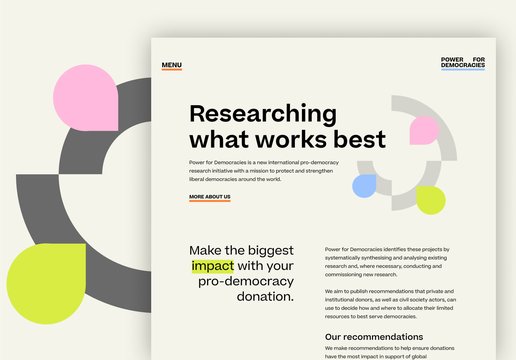
There’s also the Now-Next-Later planning model – a way to phase work so you’re not trying to fix everything at once. It’s how we helped Power for Democracies launch a values-led global research platform in six weeks. And it’s how we helped University of Oxford’s GO Lab cut page load times from more than 10 seconds to under two seconds globally without a rebuild.
It’s not revolutionary. It’s deliberate, phased, realistic work that doesn’t blow your budget or call for emergency heroics.
Raising platform standards
One thing that’s become clear through this work is that most organisations don’t need more features or fancier platforms. They need stable, steady, maintainable infrastructure. They need ongoing support from partners who understand their sector. And they need sustainable funding models that treat digital as the critical asset it is, not a one-off project.
A good platform empowers editors, giving them the freedom to publish without dev support for routine tasks. Someone’s measuring performance, accessibility, security – and owning the fixes. You have a clear plan and timeline when you request work. Support shows up before problems escalate. Progress is visible with a steady rhythm.
When those things are in place, operational stress and organisational risk drops. Your team can focus on getting your message and mission to those who need to hear it, instead of fighting the platform.
If any of this sounds familiar
You’re not on your own. And you’re not failing.
The research shows this is structural – it’s happening across charities, think tanks, nonprofits, universities, and public sector organisations across the UK. Platforms are being treated as projects when they’re infrastructure. And the people managing them are carrying accountability without the authority, budget, or support to fix the underlying problems.
These patterns are diagnosable. Once you can name what’s happening, you can fix it.
That’s what the kit is for. To help you get clarity on what’s really draining budget, slowing publishing, and creating risk – and stabilise it in 30 days. Get access now:
It’s free. It’s practical. And it’s built from almost 20 years of partnering with organisations whose work can’t wait – and certainly can’t fail.
Rob Colley is director at Cursive. We build, amplify and support, platforms for mission-driven organisations so important ideas travel further.