What makes some of the best charity fundraising websites succeed, where others struggle?
The difference rarely comes down to the obvious things. Instead, it’s in a series of small decisions that most people never consciously notice.
Visit a handful of charity donation websites in the UK and you’ll start to notice a pattern. Some greet you with a clear, confident DONATE button. Giving feels effortless. Forms are short. Choices are clear. No clickaboutery needed. Others unintentionally add friction – forcing supporters to scroll and search and squint until they forget why they landed there in the first place.
When you look at the latest sector data, the picture becomes clearer:
The Charity Digital Skills Report 2025 shows a major gap between the digital ambitions charities talk about and the tools they actually have. Only 44% of charities have a digital strategy in place, despite 74% saying digital is a priority. And half of all charities rate themselves as poor at investing in or resourcing digital effectively – the single biggest skills gap across the sector.
This is crucial context for changemakers planning or improving charity donation websites. UK organisations in the Midlands and North of England particularly struggle with digital maturity, skills, funding, and AI uptake, compared to the overall sample of charities surveyed. But, why?
The gap between intention and action tells us something important. Most charities know what they should be doing. The challenge isn’t lack of awareness. It’s working out which problems to solve first, and in what order.
Understanding what’s broken
When charities tell us their web platform isn’t working, they usually describe symptoms rather than causes.
“Our site is slow.”
“Donations are down.”
“The CMS is making our editors go full Jack Nicholson in The Shining”.
These are valid headaches, but they’re not the full picture.
When we dig deeper during Discovery, we find that organisations – and often the agencies they’ve worked with – treat their digital platform as a project rather than an asset. They build it, launch it, then start stressing when it turns into a bug-ridden slug 18 months later and they’re launching tickets into the void.
Meanwhile, the sector is under significant funding pressure:
69%
of charities struggle with squeezed finances
64%
can’t find funds for infrastructure, systems, and tools
60%
haven’t accessed any funding for digital costs in the past year
So the big question is: how do you make sure your web platform serves your mission long-term, when time, money, and resources are getting tighter?
The cost of getting it wrong
This intention-action disconnect holds back online charity fundraising – websites are just there, without the strategy or care needed to make an impact. In fact, one quarter of charities admit struggling to make the most of their digital platform, 35% rate themselves “poor” at online fundraising, and 27% don’t do it at all.
For a sector increasingly reliant on digital income, this isn’t a small problem. It can leave leaders constantly firefighting instead of focusing on mission, digital teams overstretched and reactive instead of proactive, and orgs pouring budgets into sticky-plaster-fixes while underlying issues get worse.
How to make the most of your digital presence
If you’re one of many charities prioritising digital this year and next, we’re going to try and get you closer to closing that gap. Your web platform needs to do more than process secure transactions. It needs to tell stories, build community, and provide transparent evidence of impact. Not because it’s trendy, but because that’s what converts casual interest into sustained support.
What modern donors want
Let’s consider the most important person here: your web user. Modern supporters - particularly younger ones - approach online charity fundraising websites with both enthusiasm and scepticism. They want to understand where their money goes and what change it creates. They’ll research thoroughly, check reviews, and notice if your claims don’t match reality.
Gen Z donors treat giving as an ongoing relationship rather than a transaction. They may not have the disposable income of older generations, but they’re developing giving habits that could last decades. The best charity giving websites going forwards will adapt to this pattern - building very different digital strategies from those chasing one-time donations.
Platform features that truly matter
The best charity fundraising websites aren’t necessarily the ones that feel big and flashy in a creds deck. It’s about making giving effortlessly simple for that person who just saw your TikTok post and wants to donate £10 on the bus.
For online charity fundraising, websites and platforms must function properly on small screens. A UK online donation insights report analysing over £25m in charity income found that 61% of regular donations and 40% of one‑off donations were made on mobile in 2024, and 60% of one‑off mobile donations used a digital wallet such as Apple Pay or Google Pay.
This means your digital donation journey needs:
- Fast loading times (every second really does count)
- Navigation making sense on small screens
- Simplified donation processes with minimal steps
- Video optimised for mobile viewing
- Easy social sharing from mobile devices
If your donation process requires endless scrolling, multiple page loads, or complex forms on mobile, you’re losing donors before checkout.
The five-minute mobile audit: Pull out your phone. Time how long it takes to complete a £10 donation from your homepage. If it’s more than 90 seconds, you’re likely losing donors. Count the clicks. Note every decision point. The best charity donation websites minimise this journey ruthlessly.
Building trust is crucial. One glitch in a user’s digital experience can create the psychological hiccup that derails everything. When we build donation platforms, we smooth the bumps, remove the mental load, and make these elements obvious:
- SSL certificates and secure payment indicators
- Data protection credentials (only 45% of charities rate themselves as excellent at GDPR compliance)
- Clear charity registration numbers and regulatory information
- Financial transparency showing how funds are allocated
- Third-party ratings and accreditations
- Genuine testimonials from donors, beneficiaries, and partners
- Privacy policies written in plain English
With 43% of charities citing data privacy concerns as barriers to adopting new technologies, and 51% of large UK charities identifying this as their top barrier to AI adoption, demonstrating strong data security has become table stakes.
The best charity fundraising websites let supporters manage their experience:
- Frequency preferences preventing overwhelm
- Topic selection allowing them to focus on what they care about
- Channel preferences respecting how they want to be contacted
- Easy opt-out options maintaining trust even when people step back
Tailoring updates to supporter interests increases engagement and reduces unsubscribes. People appreciate organisations that value their time and attention.
Not everyone visiting charity donation web platforms are ready to donate immediately. Civil Society’s 2025 report stressed how building ’meaningful, authentic connections’ via personalised journeys that recognise donor motivations makes a difference to future donations and long-term support:
- Email sign-ups for staying informed
- Petition signing for advocacy campaigns
- Event registration for in-person connection
- Social media follows for ongoing updates
- Newsletter subscriptions for deeper insight
- Volunteer applications for hands-on involvement
Major donors often start as low-level engagers. Providing alternative entry points, multiple pathways, and varied calls-to-action shows you get this reality.
Research by Civil Society also confirms ’giving is emotional’, with commitment, satisfaction, and trust as top retention factors.
The most effective digital charity content communicates clearly:
- The problem you’re solving, in human terms
- What you’re doing about it right now
- How supporters can help with specific actions
- The tangible results their contribution will create
Wherever possible, use authentic stories with real people and genuine emotions. Donors respond to human connection, not corporate language about ’stakeholder engagement’ or ’holistic approaches’.
Modern donors have varied – and often unstable – financial situations.
The best charity fundraising websites recognise this with different giving options:
- One-time donations for those testing the waters
- Flexible recurring donations that don’t lock people into commitments they might struggle to maintain
- Specific fund allocation allowing donors to direct money where it matters most to them
- Multiple payment methods matching how people commonly pay for things
- Gift Aid integration that’s simple to understand
Many modern donors have precarious employment. Traditional monthly direct debits feel risky when next month’s income isn’t guaranteed, so building options that accommodate this reality is both smart and fair.
Online charity fundraising websites that perform well give ongoing visibility:
- Regular updates tied to specific causes or campaigns donors supported
- Visual progress indicators that really do progress
- Real stories from beneficiaries that donors helped
This matters particularly for donors who research charities thoroughly before giving. Making it easy for them to find evidence isn’t about mistrust - but about meeting reasonable expectations for transparency.
The best charity giving websites and platforms create opportunities for ongoing conversations:
- Social sharing that makes amplifying your message effortless
- Peer-to-peer fundraising tools empowering supporters to raise funds
- Event calendars showing ways to contribute beyond money
- Supporter stories creating social proof
- Volunteer opportunities for those wanting to contribute time
Charities that help modern donors feel part of the change, with genuine digital engagement, build loyal communities.

Rethinking supporter journeys
Traditional marketing funnels assume linear journeys from awareness to donation. But the nonprofits building effective online charity fundraising websites know their supporter journeys are circular and ongoing.
Torchbox, the makers of Wagtail CMS, call this an infinite loop:
- Inspiration: Compelling stories drawing people in
- Exploration: Easy navigation building trust
- Community: Opportunities connecting with others sharing their values
- Loyalty: Ongoing engagement making supporters feel valued
This cycle repeats continuously. Supporters move between stages based on circumstances and your communication. Design your digital platform that meets the movement throughout this loop, not just pushing toward single conversions.

Testing and learning
Even the best charity giving websites are never truly finished. The most effective teams treat their platform as something to continuously improve through conversion rate optimisation, not something you launch once and move on from. That usually means:
- Regular user testing with real donors and potential supporters
- A/B testing of donation forms, calls to action, and content
- Analytics review identifying where people drop off
- Accessibility audits ensuring sites work for everyone
- Technology updates (such as responsible AI adoption) keeping pace with changing expectations
Your web platform is an evolving asset that needs ongoing attention and care, not a one-time project to tick off.

The big infrastructure question
Behind every effective fundraising website sits infrastructure that actually works. The 2025 Charity Digital Skills Report reveals concerning patterns:
- 30% say their systems and databases are poor or non-existent
- 24% say their IT support and hardware is poor or non-existent
- 39% are poor at website and analytics data (up from 31% the previous year)
These infrastructure challenges directly undermine fundraising effectiveness, donor tracking, and impact demonstration.
Should we build a charity app?
Possibly, but probably not yet.
For organisations with substantial supporter bases, dedicated charity app development offers push notifications, offline functionality, enhanced personalisation, and integrated giving. However, it does require significant investment and ongoing maintenance.
For most charities, getting web platforms right remains the priority – the data (and what our team sees day to day) proves it. Chasing app features when your core platform struggles is solving the wrong problem first. However, when you are ready for that, we can help.

Why sector specialism matters
Choosing the right development partner matters more than many organisations realise. Generic web agencies might understand design and technology, but they often miss the nuances that make the best charity giving websites a delight to use.
The capacity data tells the story: 40% of charities cite lack of technical expertise as a barrier, 63% struggle with insufficient capacity, and 59% need core staff time to spend on digital (doubled from 30% in 2024).
Why charities choose to partner with Cursive:
With nearly 20 years building platforms for charities, nonprofits, think tanks, and academic organisations, we know what builds trust, opens up giving, and holds onto engagement. You don’t need to explain what Gift Aid is, how your governance structure works, or why your fundraising cycles look the way they do. We already know.
We use Wagtail and Django - tools we’ve mastered because they’re built the same way we are: secure, flexible, and built for the long haul. Our platforms have never failed a penetration test. They scale smoothly as your mission grows. And they’re designed to evolve, not be replaced every three years.
The best charity fundraising websites integrate smoothly with CRM systems, email platforms, and payment processors people in the sector like to use. We already know these tools, and can connect the dots across your digital ecosystem properly.
According to the 2025 WebAIM Million report, 94.8% of the top one million homepages still have detectable WCAG failures – and charities are no exception. The Charity Digital Skills Report 2025 found that only 28% of charities see accessibility and inclusion as top priorities (rising to 53% for disabled or d/Deaf led charities). Just 15% say their services are informed by research with users from diverse communities. And only 25% say their services are accessible to a great extent.
If you want your charity’s digital platform to stand out from the rest, build accessibility in from the very beginning as standard. That’s exactly what we do at Cursive, ensuring your platform works for everyone who needs it.
While other agencies move on after go-live, we stay close. Our proactive digital care is structured, steady, and responsive - designed to keep your stress low and site performance high. Real people answer when you call. We monitor issues before they become problems. And we help your platform evolve as your mission grows.

If you’re ready to address your charity’s digital presence:
- Audit your current web platform against the features we’ve mentioned, honestly
- Gather feedback from real, genuine supporters about their experience
- Identify quick wins potentially improving conversion immediately
- Plan longer-term improvements requiring more significant investment
- Research digital partners with proven charity sector expertise
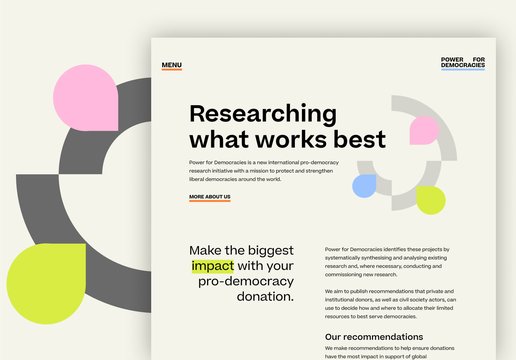
You don’t need to do everything right now. It’s often easier to implement gradual changes, focusing on those that have the most significant impact on your specific supporters and organisational goals first. See how we’re taking this phased approach to Power For Democracies platform – focusing on refining existing features before our longer-term growth phase.